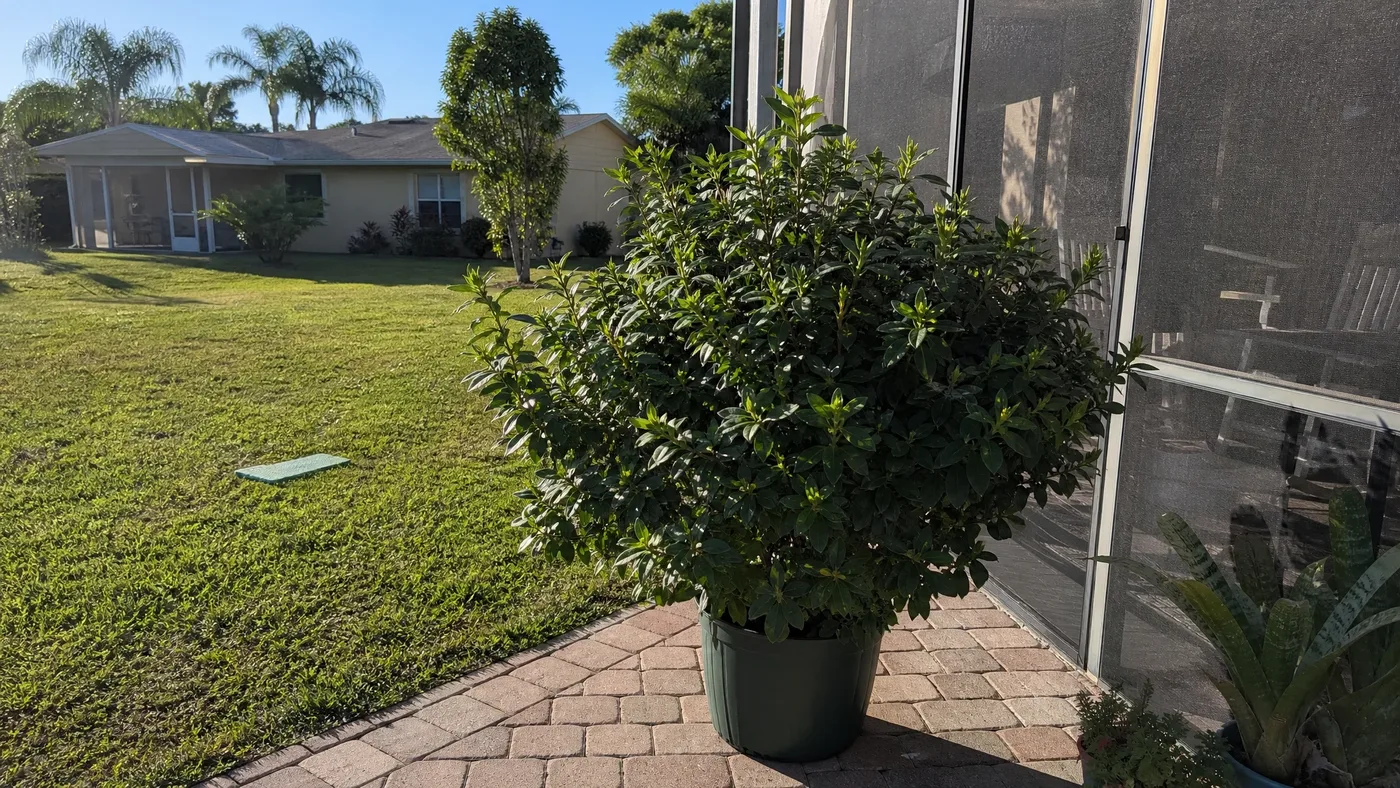
George L. Taber Azalea in Coastal Gardens: Salt and Wind
A salt-crusted fence rail after a nor'easter shows what two days of coastal air leave behind. Now ask what that spray does to a shrub that was first noticed in 1928 at the Glen St. Mary Nursery in Baker County, Florida. Most people guess it shrugs the spray off. It does not.
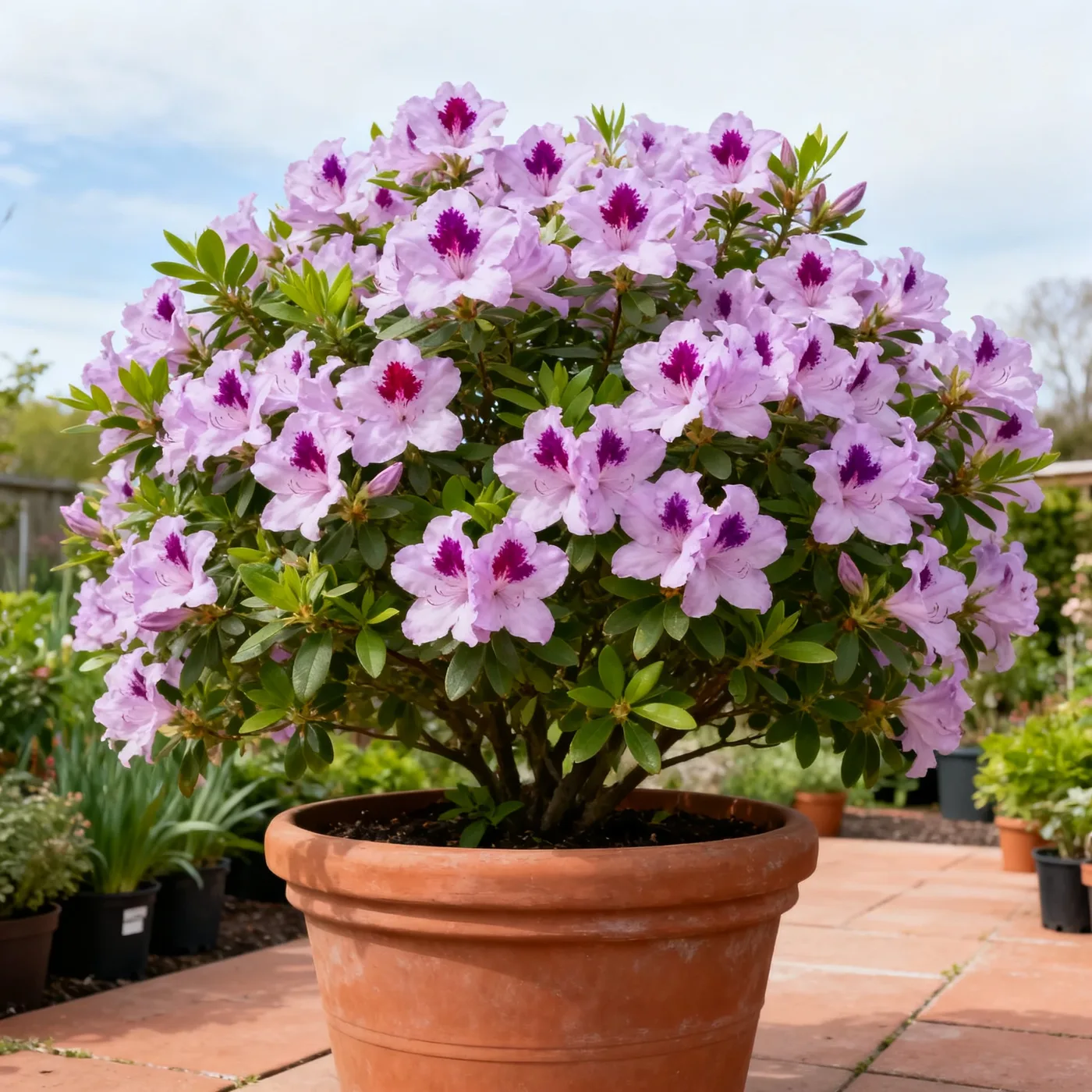
That gap between origin and tolerance matters, because coastal yards are exactly where this azalea is most tempting. Put it in the wrong spot and you get brown-edged leaves and a thin spring show. Put it in the right one and the pink flowers hide the foliage. Read on for how salt and wind act on the leaf, three yards worked through one at a time, and the rinsing routine that follows a storm.
What Salt Does to a Leathery Evergreen Leaf
One of the most common questions we get is whether a Florida-born azalea can take beach air. The honest answer starts with the leaf. Evergreen azalea leaves are firm and slightly leathery, a build that slows water loss in hot weather. That same surface gives salt a place to sit.
How Spray Burns the Leaf
When spray lands, the water evaporates and the salt stays behind as a thin crust. Salt on the surface pulls moisture out of the tissue beneath it, and wind speeds the loss. Damage shows first at the edges and tips, which are the last places water reaches and the first to dry out. Leaves facing the wind brown first, so a shrub often looks scorched on one side and fine on the other.
Wind alone does harm too. Constant movement dries the leaves and scuffs them against twigs, and a plant already stressed by salt has little in reserve.
Salt in the Root Zone
Spray also lands on the ground, and storm surge can soak it. Azalea roots are fine and sit near the surface, so they meet that salt first. Salty soil makes it harder for roots to take up water, which is why a shrub can wilt while the soil is wet. Rain flushes salt out of a well-drained bed, so drainage matters here as much as anywhere in the yard.
What the Florida Origin Does and Does Not Do
The Glen St. Mary Nursery specialized in citrus and ornamental plants, not beachfront shrubs, and that shows in the plant. Its Florida roots explain why it handles Southern heat and sun and why it is rated for zones 8 through 10. They do not explain salt. Southern indica cultivars like this one have low to no salt tolerance and will not do well on the extreme coast.
Some sellers pitch any Florida-origin azalea as a coastal plant. We would not. Mild-winter hardiness and salt tolerance are separate traits, and this shrub has only the first.
George L. Taber Azalea on a Narrow Side Bed
Picture a bed between the house and a fence. The wall shades it for part of the day, which suits the plant. Two things work against it: wind that pours through the gap between buildings, and heat thrown back from a light-colored wall in the afternoon.
Start with size, because it decides everything else. The cultivar grows 10 to 12 feet tall and 8 to 10 feet wide. A strip along a wall will not hold that spread for long, so plan on a single plant, not a row, and plan to prune. The group is very tolerant of pruning, which should be done after flowering.
Set Up the Bed in This Order
Work through these steps before you dig, since the wind and heat pattern of a side bed is not obvious until you stand in it.
- Stand in the bed on a breezy day and tie a strip of cloth to a stake. Note where the air pours through. Place the azalea at the calm end or behind a solid fence panel, never in the mouth of the gap.
- Check the wall. Light paint and glass throw heat back at the leaves. Pull the plant away from the wall so air can move behind it.
- Test the soil near the foundation. Concrete can leach lime into the ground, and these azaleas need acid soil, below pH 6.0. Yellow leaves with green veins point to a pH that is too high. Our soil and drainage guide covers the fix.
- Water by hand. Eaves block rain, so the bed dries faster than it looks. Follow the schedule in our watering how-to and keep the mulch layer in place.
- Prune right after bloom to hold the width, and cut back any branch that rubs the wall.
If the bed gets any salt at all, the funnel effect concentrates it. A side bed near the water is a place to protect the plant, not to test it.
Corner Lot Winds Against George L. Taber Azalea
A corner lot has no neighbor on two sides, so wind arrives from more than one direction and nothing slows it. Spray carried on that wind lands on whatever stands tallest. This is the hardest of the three yards, and the azalea does best here only if you build shelter first.
Build the Windbreak Before the Azalea
Use native coastal shrubs for the outer line, since they evolved with salt and wind and shrug off what burns an azalea. Wax myrtle and yaupon holly are two we often point customers toward, and your county extension office can name others suited to your stretch of shore. As a bonus, birds use these dense evergreens for cover and food, so the windbreak gives back to the yard.
Set the azalea behind the windbreak, not in it. Give the wind room to slow and drop its spray before it reaches the leaves. Where space allows, plant several azaleas together. Mass plantings on 4 to 6 foot centers work well, and in a group the outer plants take the burn while the inner ones stay green.
Stake Young Plants Low and Loose
A young plant in sandy coastal soil can rock in the wind and tear its fine roots before they anchor. Stake it, but gently. Our planting guide covers depth and root ball handling, and these points are specific to wind.
- Drive one low stake on the windward side and tie the trunk with a wide, soft strap. Leave a little slack so the stem can flex.
- Keep the root ball at its nursery depth. Planting deeper to gain stability suffocates azalea roots.
- Water through the first dry spell even if the wind makes the surface look damp.
- Remove the stake and strap once the plant stands without leaning, so the ties do not cut into the bark.
Expect some one-sided browning on the windward face. Prune it out after bloom and the shrub will fill back in.
A Pot on a Hot Salt-Dusted Deck
A deck turns every problem up a notch. Boards and rails hold heat, salt dust settles on every flat surface, and the pot has nowhere to send either one. A container is a fair choice for this azalea only in the lightest salt air, and only if you treat it as a plant that needs daily attention.
Heat and the Root Ball
The root zone in a pot bakes faster than ground soil. Pick a light-colored pot, set it on feet so air passes beneath, and shade the pot itself if the sun hits it all afternoon. The group grows well in sun, but the roots still want to stay cool and moist. Use an acidic, humus-rich mix with good drainage, and check the pot daily in summer.
A container also limits root room, so expect a smaller shrub than the 10 to 12 feet an in-ground plant can reach. Prune after flowering to keep it in scale.
Salt Dust on Leaves and in the Mix
Dust and dried spray collect on the leaves and rails. Rinse the foliage with fresh water every week or two in salty seasons, and flush the pot until water runs freely from the drainage holes. Salt left in a small volume of mix builds up quickly, and white crust on the surface is your warning.
Wildlife Visitors
Decks draw visitors. This group is frequently damaged by deer, so a pot on a low, open deck may get browsed. Lace bugs and mites also like hot, dry spots, so turn leaves over and look underneath weekly.
Mind pets too. The ASPCA lists azalea as toxic to dogs, cats and horses, so set the pot where animals cannot chew it.
Rinsing Salt Off George L. Taber Azalea After Storms
Rinsing is the one thing you can do that makes a real difference once spray has landed. In our rows, we do it as soon as the wind drops, before the sun bakes the crust into the leaf.
Rinse and Leach in Order
- Use a hose on a gentle shower setting with fresh water, not a jet. Wash the tops and undersides of the leaves, working from the top of the shrub down.
- Water the soil slowly and for a long time so the water moves through the root zone and drains away. Repeat on a second day if the storm was a bad one.
- Skip fertilizer for now. Feeding a salt-stressed plant adds more salt to the soil.
- Leave browned leaves in place for a few weeks. They still shade the stems, and new growth will show what is alive.
Judging the Damage
Do not cut on the first day. Scratch a twig with a fingernail, and green tissue under the bark means the branch is alive. Salt water standing over the roots after a surge is much worse than spray, and a plant that sat in it may decline for weeks. This table helps you separate salt from other causes before you act.
| What you see | Likely cause | What to do |
|---|---|---|
| Brown edges and tips on the windward side | Salt spray | Rinse the leaves, then prune after bloom |
| Wilting while the soil is wet | Salt in the root zone | Leach with slow, deep watering |
| Yellow leaves with green veins | Soil pH too high | Test the soil and acidify |
| Pale stippling on the undersides | Lace bugs or mites | Inspect the leaf backs and treat |
Our guide to common azalea problems goes further on the last two rows.
What Three Yards Teach About George L. Taber Azalea
All three yards come down to the same thing: shelter, fresh water and acid, well-drained soil. The side bed needs a calm corner, the corner lot needs a native windbreak and a loose stake, and the deck pot needs weekly rinsing and a cool root zone. In every case the shrub does its best when salt never reaches it, or is washed off quickly.
Where the tolerance runs out is the extreme coast, the first row facing open water with spray on the leaves much of the year. There, leave this azalea to a more salt-proof neighbor and let a native shrub take the front line. Start with the most sheltered spot in your own yard and move outward only once the plant proves itself.
George L. Taber Azalea
Nursery-grown George L. Taber Azalea in sizes from 1 Gallon, shipped to your door.
From $29.99
Shop Now →Our growers watch our George L. Taber rows through the year, from the pink bloom to the first hot days, in acid, humus-rich, well-drained soil on our own farms. Every plant we ship comes from our own rows. When you are ready to plant, take a look at our shop.