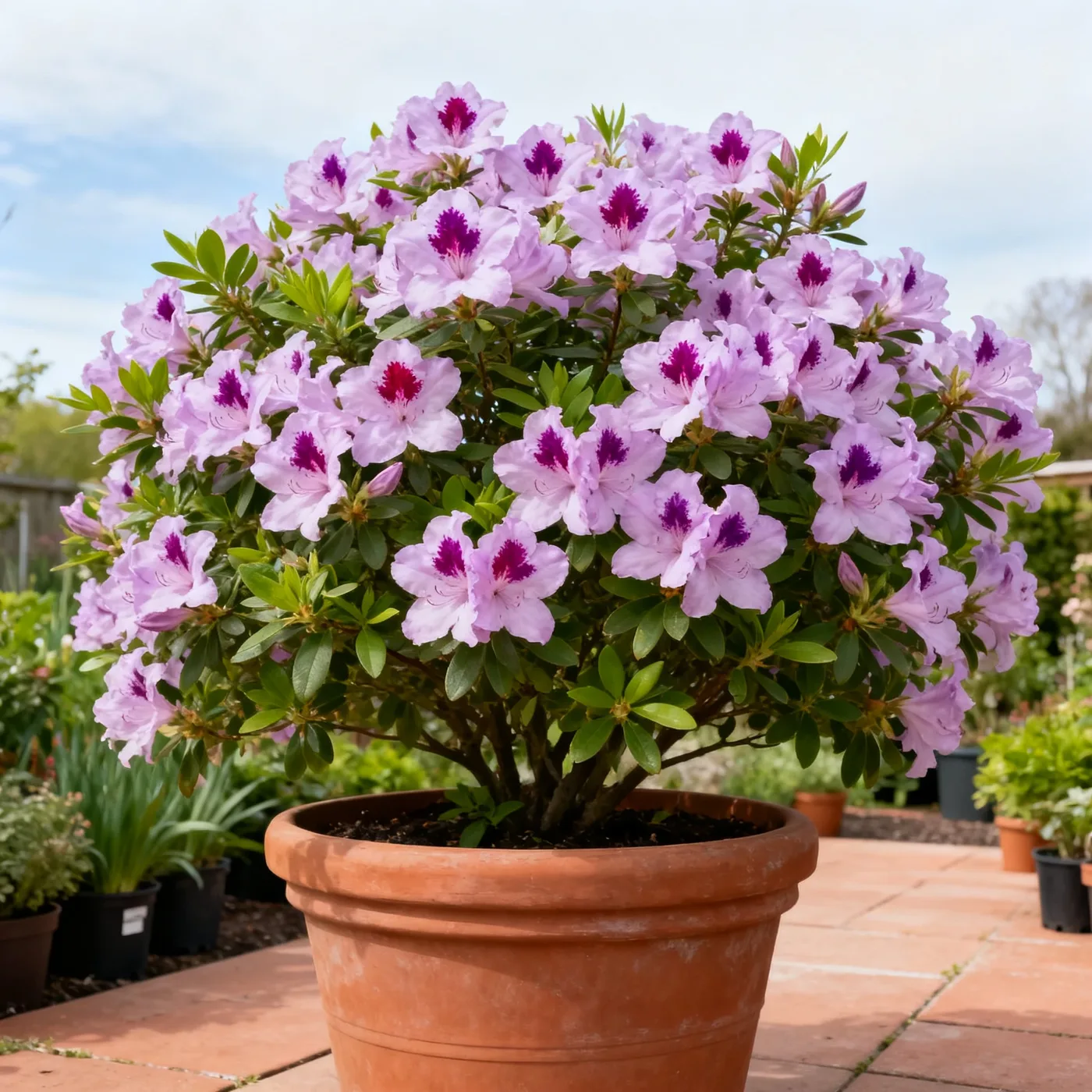
George L. Taber Azalea
Rhododendron × 'George Lindley Taber'
Orchid-Pink Evergreen Azalea, Part Shade Garden Favorite
This size is not in the online store yet. Ask about availability and we will reply with current stock.
- Orchid-pink spring blooms with distinctive deeper magenta blotch on upper petals
- Evergreen foliage provides year-round screening and foundation structure
- Moderate growth to 6-10 feet in part shade to filtered sun
About this plant
George L. Taber Azalea is an evergreen shrub prized for its orchid-pink flowers with a deeper magenta blotch, appearing mid to late spring. It thrives in part shade with morning sun and afternoon protection, making it ideal for foundation plantings, screens, woodland gardens, and mass plantings. Moderate growth reaches 6-10 feet at maturity.
Your azalea arrives in a nursery container, ready to plant. Upon arrival, choose a location with part shade and afternoon protection, especially in warmer zones. Plant in well-drained, acidic, humus-rich soil; avoid heavy clay or poorly drained sites. Water thoroughly after planting and maintain consistent moisture throughout the first season; the shallow roots dry out quickly without regular attention.
George L. Taber Azalea at a glance
| Botanical name | Rhododendron × 'George Lindley Taber' |
|---|---|
| Plant type | evergreen shrub |
| USDA zones | 7-10 (most reliable and widely planted in 8-9) |
| Mature height | 6-10 ft (some older specimens in the Deep South reach 10-12 ft) |
| Mature width | 6-10 ft |
| Sun | part shade to filtered sun; morning sun with afternoon shade is ideal, especially in hotter zones |
| Water | moderate, consistent moisture; not drought tolerant once established, shallow roots dry out quickly |
| Bloom time | mid to late spring (March-April in the Deep South, into May further north in its range) |
| Bloom color | light orchid-pink with a darker reddish-purple/magenta blotch on the upper petal |
| Growth rate | moderate, roughly 6-12 inches per year once established |
| Deer resistance | poor; azaleas are a preferred deer browse in most regions |
| Best planting time | fall or early spring, avoiding the heat of summer |
Container sizes explained
| #1 / 1 Gallon | A trade one gallon pot (about 6.5 inches). One to two seasons older than a quart, with an established root system. |
|---|---|
| #2 / 2 Gallon | A trade two gallon pot. Common for peonies and perennials that need root room; usually blooms the first or second year. |
| #3 / 3 Gallon | A trade three gallon pot (about 10 inches). A well-developed shrub or small tree, often 2 to 4 feet tall on arrival. |
Questions before you buy
Which size should I choose?
The 1-gallon is ideal for first-time planters or smaller spaces and establishes quickly. The 3-gallon offers more root development and faster visual maturity. Both reach the same mature 6-10 foot size over time; choose based on your budget and desired landscape presence now.
When should I plant after it arrives?
Plant within days of arrival if possible. Spring and early fall are ideal when soil moisture is consistent and temperatures moderate. If arrival coincides with summer heat, provide afternoon shade for the first few weeks to reduce transplant stress.
How large does George L. Taber Azalea grow?
This azalea reaches 6-10 feet tall and wide at maturity, with some Deep South specimens reaching 10-12 feet. Growth is moderate at roughly 6-12 inches per year. Plan for full mature size within 10-15 years.
What sun and light conditions does it need?
George L. Taber thrives in part shade to filtered sun. Morning sun with afternoon shade is ideal, especially in warmer zones where afternoon heat can stress foliage. Northern growers can provide slightly more direct sun if soil moisture remains consistent.
Which hardiness zones work best?
Hardy in USDA zones 7-10, with best performance and widest cultivation in zones 8-9. Zone 7 planters should choose a protected location with afternoon shade. Zone 10 growers should provide afternoon shade during the hottest parts of summer.
What is the first-year care routine?
Water consistently to keep soil evenly moist; shallow roots dry out quickly and the plant is not drought tolerant when young. Ensure well-drained, acidic, humus-rich soil and avoid heavy clay or poorly drained sites. Mulch around the base to retain moisture and maintain cool soil temperatures.