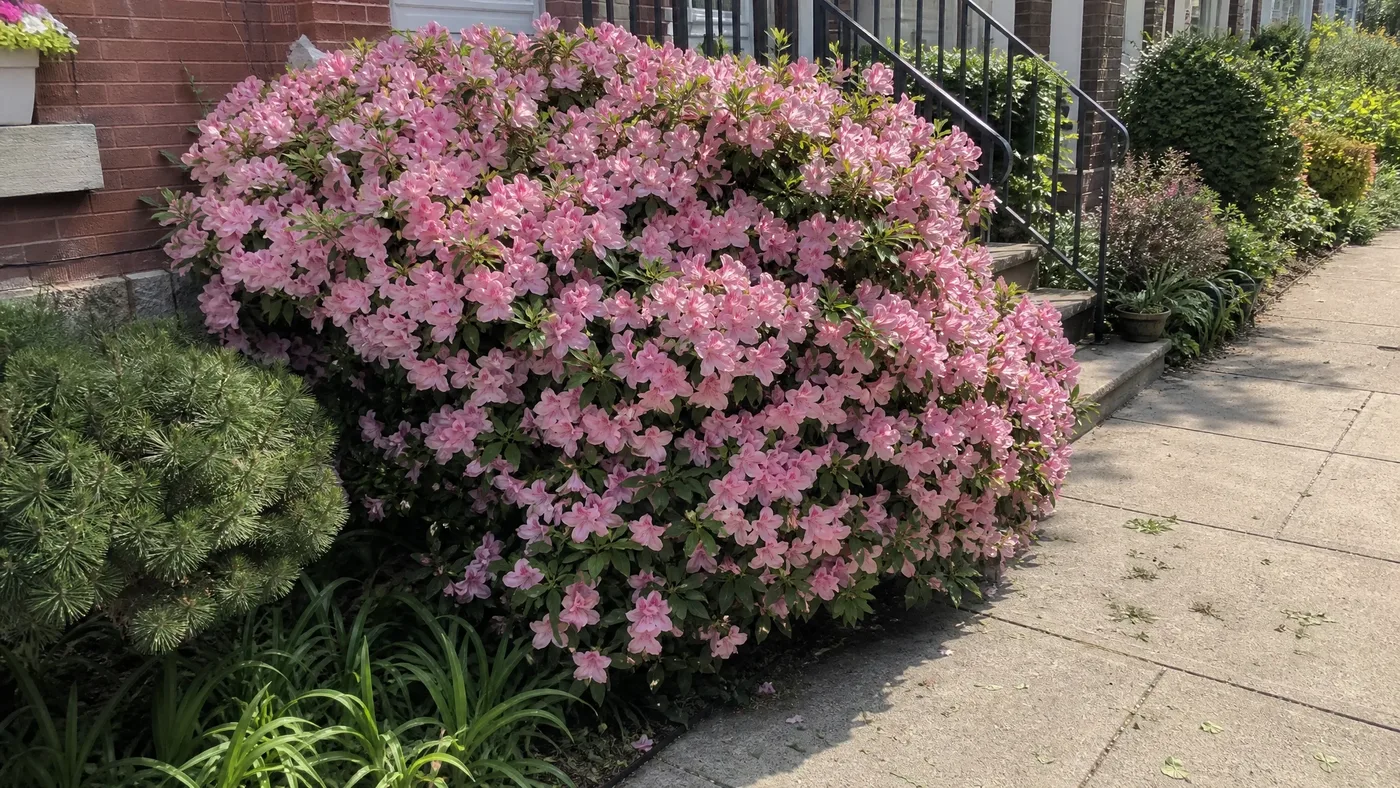
Is George L. Taber the Hardiest Southern Indica Azalea?
"Which of these Southern Indicas will still be here in ten winters?" A customer put that to us with a spreadsheet of prices open and a hard freeze in the forecast. It is the right question, because a shrub priced for its first spring has to be judged on its tenth.
Our short answer is that George L. Taber is a strong candidate, but the title of hardiest needs honest qualifying. Choosing wrong costs years: a tender azalea in a cold pocket gets replaced, and a large one in a small bed gets cut back every season.
This article talks about how George L. Taber compares with its Southern Indica relatives on cold, size, soil, upkeep and bloom, and answers the questions customers ask us most. Read on to learn which of those it wins, which ones cost you later, and what budget plan fits your winters.
What Hardiest Can Honestly Mean for a Southern Indica
Cold tolerance gets all the attention, but we score hardiness on three counts. The first is how low a winter the shrub takes without losing wood. The second is how it handles a long, hot summer, since that is where most Southern Indicas live.
The third is how much neglect it forgives: a missed watering, a late pruning, soil that is merely acceptable. A plant that wins one count and fails the other two is not the hardiest, whatever the tag says.
Where This Cultivar Was Selected
George L. Taber was first noticed growing at the Glen St. Mary Nursery in Baker County, Florida, in the spring of 1928. The nursery tested it for years before adding it to its catalog in 1938. That is a decade of evaluation in a mild-winter climate, so its track record is a lower South track record. Nothing in that history promises toughness in a hard northern winter, and we do not claim it.
The Comparison Set
For fairness we measure it only against the Southern Indicas that Clemson's extension names as popular: Formosa, Mrs. G. G. Gerbing, Judge Solomon and Pride of Mobile. Each criterion below ends with a verdict, so you can weigh them against your own site instead of taking a single score from us.
Cold Tolerance Across George L. Taber Azalea's Class
The cultivar is suited to zones 8 through 10. The Southern Indica hybrid group is rated wider, at zones 6a through 9b, but that range describes the whole class and not this selection. Reading the group's 6a as George L. Taber's floor is the trap we see most often in planning spreadsheets.
What the cultivar's range does tell you is that it handles heat well. The group tops out at 9b, while the cultivar listing runs through zone 10, so on the warm end it has more room than the class average. On the cold end we cannot show it beating its siblings, because the sources we trust give no separate zone figure for Formosa or the others. Check each sibling's own listing before you assume a winner.
Reading Your Own Winter Honestly
In zone 8 we would plant it with confidence and ordinary siting: shelter from drying wind and a layer of mulch over the roots. In the colder pockets of the South, treat any Southern Indica as a bet and ask your local extension service what has actually survived in your county. Our winter care guide covers what to do the week a freeze is forecast.
Cold verdict: not proven the hardiest. It is dependable through its listed range and better than the class average at the warm end, which is a different strength than the one the title implies.
Mature Size and the Space George L. Taber Azalea Demands
The cultivar grows 10 to 12 feet tall and 8 to 10 feet wide, a large, spreading evergreen azalea that is most impressive in mass plantings. The Southern Indica group runs 6 to 12 feet tall and 6 to 8 feet wide. So George L. Taber sits at the top of its class on height and above it on spread, and compact siblings at the low end of that range will fit places this one cannot.
The timeline matters for a budget. One reference, the ARS, puts the cultivar at only 4 to 6 feet after ten years. You are buying a decade of growth toward the listed size, not a finished shrub in year three, and our guide to how big it really gets walks through those years.
What the Spacing Costs
For a mass planting, space plants on 4 to 6 foot centers. At 5-foot centers, a 30-foot run takes about six plants. That is the budget argument for a large cultivar: fewer plants per foot of screen, and a bed that looks full once the plants meet.
The cost shows up on the other side. Put this shrub in a bed built for something 5 feet wide and you will be cutting it back for as long as you own it.
Size verdict: it wins for screens, hedgerows and mass beds, and it loses beside doors, under windows and in small borders.
Soil Tolerance for George L. Taber Azalea Beds
The group needs humus-rich, acidic, moist soil with good drainage, and acid here means below pH 6.0. We have found no source that gives George L. Taber a wider allowance than its siblings, so we plan it the way we plan the others: no better and no worse.
Drainage matters because crown rot and root rot are among the group's diseases. Both follow wet feet, and both are expensive here because the plant is large by the time they show. A shrub that was cheap to buy turns into a removal job.
What we tell customers is to test the bed before the plants arrive, not after. Three checks do most of the work:
- Test the pH of the planting area itself. A reading at or above 6.0 needs correcting first, since the group is rated acid soil below that line.
- Watch where water stands after a heavy rain. If it lingers, plan a raised or mounded bed rather than hoping the roots adapt.
- Work humus into the whole planting area, not only the hole, and finish with mulch to hold moisture.
One forgiving point is light. The group grows well in sun, so a bright site is not an automatic disqualifier. Our guide to soil, pH and drainage has the details on adjusting a bed.
Soil verdict: average. It will not rescue a poor bed, so soil does not earn it the title.
Upkeep Hours Over Ten Years of George L. Taber Azalea
We cannot give you honest hour counts, because they depend on your site, so here is how the effort tends to fall. The early years are watering, mulch and keeping weeds off the root zone. The middle years are about holding the shrub inside the space you gave it. The later years are about the sheer size of the plant and what it costs if something goes wrong.
Pruning Is the Largest Recurring Job
The group is very tolerant of pruning, which should be done after flowering. That is good news, because a hard cut will not kill it. But a plant that wants 10 to 12 feet and is squeezed into a 6-foot space needs cutting every year. Our pruning guide covers timing.
Customers usually ask us whether pruning keeps it small. It does, but you are buying yourself a yearly chore, and we would rather you choose the right space than keep up the shears.
Pests, Deer and Replacement
The group's listed insects include lace bugs, mites and scale, its diseases include leaf spot, rust and powdery mildew, and deer frequently damage it. None of that is specific to this cultivar, but over ten years you should expect to meet at least one of them. Replacement is the quiet cost. A mature shrub of this size is a day of work to remove, so the best saving is getting the siting right the first time.
Upkeep verdict: moderate. It is no worse than the class, front-loaded on siting, then steady on pruning, and that pruning bill rises if you under-space it.
Flower Color and Bloom Season Trade-Offs
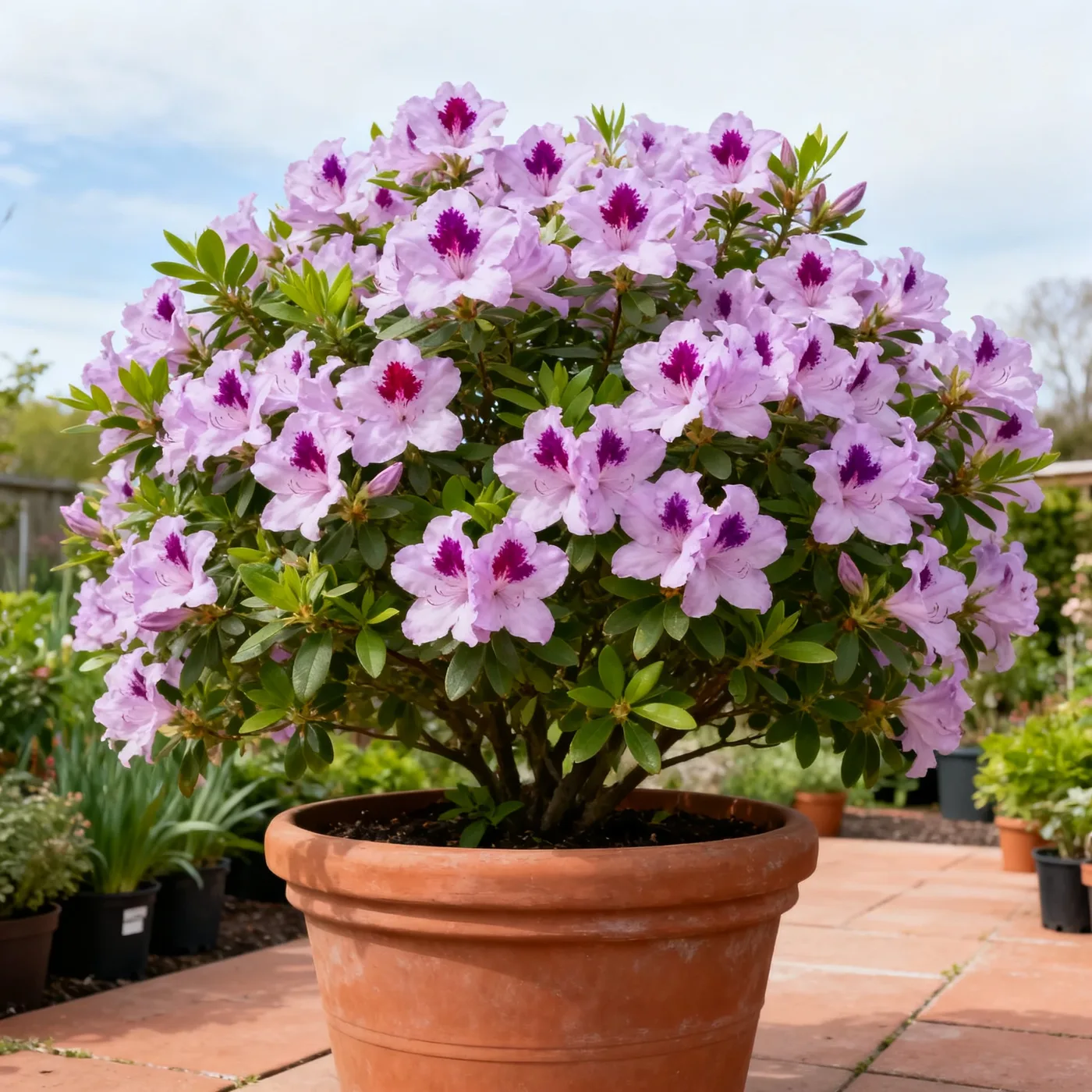
The profuse pink spring blooms are so plentiful and large that they completely hide the foliage. That is the cultivar's strongest card. Clemson's extension lists it as pink, alongside Formosa as magenta and Mrs. G. G. Gerbing as white. A Charlotte County page, though, describes white flowers with red blotches. With sources that differ, we would not promise a color from a tag alone.
Timing is where the trade-off sits. The group is one of the first azaleas to bloom. An early bloomer meets more late cold than a later one, so in a cold spring you can lose the display before you lose the plant. In the mildest part of the range that risk is small. At the edge of it, the show is what you gamble.
If a deeper violet-red is what you want, the comparison with Formosa covers the color gap in detail.
Bloom verdict: it wins on the sheer mass of flower, and the price is an early season that suits mild winters best.
Where George L. Taber Azalea Ranks for Your Budget
Here are the five verdicts side by side, with the kind of planting each one favors.
| Criterion | Verdict | Favors |
|---|---|---|
| Cold | Dependable in zones 8 through 10, not proven hardiest | Zone 8 and warmer |
| Size | Large and spreading, strong for screens | Wide spaces |
| Soil | Average, needs acid and drained beds | Beds you can amend |
| Upkeep | Pruning is the yearly cost | Owners with room |
| Bloom | Heavy early spring show | Mass plantings |
Zones 8 Through 10
Plant the row at 4 to 6 foot centers and spend your extra money on soil preparation, not on additional plants. This is where the cultivar earns its place. We grow and sell George L. Taber ourselves, which is why we would rather you check these verdicts than trust a tag.
Colder Than Zone 8
Here we would put the budget somewhere else. Ask your local extension service which Southern Indica or other azalea has lasted in your county, and spend the savings on siting and winter protection.
George L. Taber Azalea Earns a Qualified Title
In the mild-winter South, zones 8 through 10, this is the Southern Indica we would choose for a large, early, heavy-flowering planting. It wins on size per dollar and on flower, it ties its siblings on soil and upkeep, and it cannot be shown to be the hardiest on cold.
If your winters run colder than zone 8, do not pay for the title. Build a different budget plan around a smaller shrub whose cold record in your county you can verify, and keep the soil work, which pays off either way.
George L. Taber Azalea
Nursery-grown George L. Taber Azalea in sizes from 1 Gallon, shipped to your door.
From $29.99
Shop Now →George L. Taber grows on our farms in acidic, humus-rich soil that drains freely, and we have seen how it behaves once those basics are right. We are a small grower-run business, so we only ship plants we would plant ourselves, and a top-quality shrub is the best start in a mild-winter yard. If this azalea suits your climate, see the plants we have ready.