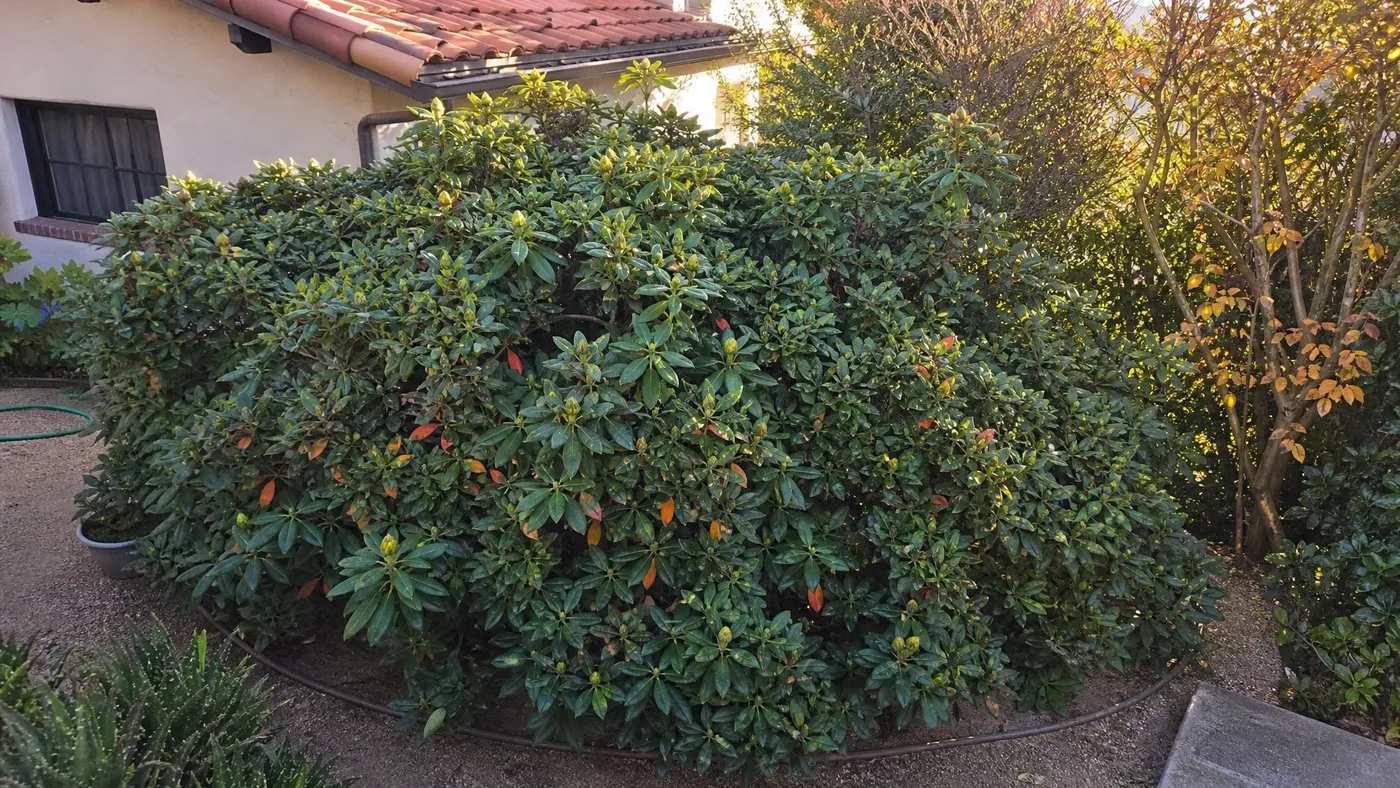
Why Does George L. Taber Azalea Drop Some Leaves in Fall?
Soak, spray, prune and feed a George L. Taber azalea that is only shedding normally, and you can turn a healthy shrub into a sick one. Soggy roots, burned tips and real dieback by spring are what that panic costs the plant. It usually starts in late October, with a pile of yellowing leaves under a shrub that still looks mostly green.
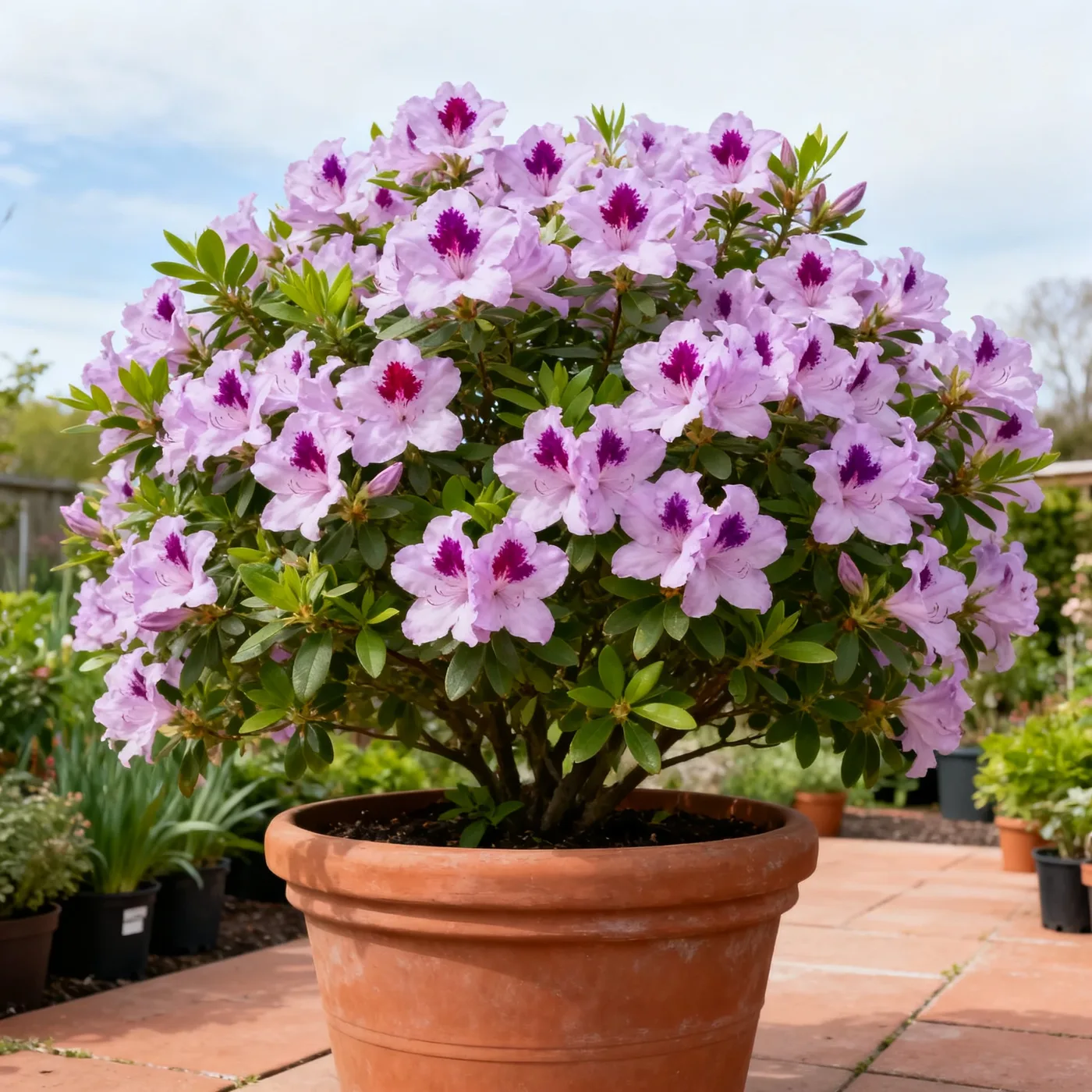
Some leaf drop in fall is normal for this plant, and the pile is the evidence of a routine reset, not a failure. We'll walk you through how its two kinds of leaves work and what the roots do while the canopy thins, then show you how to tell a normal shed from rot and which fall chores are worth your time.
Two Leaf Types on One George L. Taber Azalea
George L. Taber is a southern Indica hybrid, a large, spreading evergreen azalea that reaches 10 to 12 feet tall and 8 to 10 feet wide. Evergreen is the right label, but it hides how the plant really works. The shrub is never bare, yet it does not keep every leaf it grows. It carries two generations of foliage at once, and they behave differently in fall.
The Spring Flush
The first flush opens as the bloom fades. The pink flowers are so large and plentiful that they completely hide the foliage, so most people never study these leaves until the show is over. They are thin, flexible and a lighter green, built to grow fast and catch light while the days are getting longer.
The Summer Flush
A second flush follows later in the season. These leaves come in smaller, thicker and leathery, and they gather toward the shoot tips. They carry the shrub through winter and are the reason it still looks evergreen in January. They are the leaves to watch.
In our rows, we can tell a spring leaf from a summer leaf by touch before we ever look at color. One bends like paper and the other springs back like leather. Rub a few between your fingers and you will feel the difference too.
Why Spring Leaves Let Go While Summer Leaves Stay
Clemson Extension explains that older leaves on evergreen azaleas begin to senesce and turn yellow or purple during early autumn. Think of it as the plant closing down its oldest, thinnest foliage as the days shorten. The thick summer leaves are built for that season, with a tougher surface that holds up to cold wind and low light, so the shrub keeps them and lets the spring leaves go.
Timing is looser than most people expect. These older leaves also drop in spring when new growth appears, which means some yellow leaves fall in October while others hang on, yellow or purplish, until the next flush pushes them off. Broad-leaved evergreens in general shed in summer or early fall when leaves are two to three years old, so a few stragglers can come down at odd times.
One reason this catches people off guard is the setting. Normal azalea drop often goes unnoticed because deciduous trees are shedding at the same time. If your azalea sits in a clean bed with no oak or maple overhead, the pile under it has nothing to hide behind. The shed is no bigger than it would be anywhere else. You just see it.
What the Roots Are Doing While the Canopy Thins
An azalea's roots are fine and shallow, a dense mat of hair-thin roots in the top layer of soil. That is why the group requires humus-rich, acidic, and moist soil with good drainage. Roots this fine can't tolerate a soil that is dry one week and waterlogged the next, and they are the part of the plant you should worry about first.
The good news is that those roots keep working through fall. Cool, moist soil suits them, and they keep pulling in water while the top of the plant slows down. A shrub that is shedding its oldest leaves needs less water, not more, so the roots are easily meeting demand. The thinning canopy reflects the plant's seasonal schedule. It does not point to a failing root system.
Roots in real trouble look different above ground. UGA Extension says plants with poor roots cannot support a full leaf canopy, so interior leaves drop and all that remains are tufts of new growth at the ends of branches. The giveaway is that even the remaining leaves look tired. On a healthy George L. Taber the summer leaves along the outer stems stay flat, glossy and firm.
If your soil has been heavy or poorly drained, our guide to soil, pH and drainage for this azalea is the place to start before you blame the leaves.
Reading the Shed on Your George L. Taber Azalea
You do not need tools to judge a fall shed. Walk around the shrub on a dry afternoon and run through four quick checks. Each one tells you something different, and a normal shed passes all of them.
Run the Four Checks
- Which leaves fall. Normal shed comes from the older, thinner spring leaves, mostly on the inner and lower parts of the stems. The leathery summer leaves toward the tips should stay.
- What color they turn. Yellow, orange or purplish leaves are the usual sign, and yellow or purple older leaves in early autumn are part of the normal pattern. Leaves that go black or brown with soft stems are a different story.
- How many drop. A good-sized pile under a big shrub is common, but the canopy should still read as mostly green with the outer layer intact. It should thin, not collapse.
- When it happens. Early autumn is the normal window, though some leaves hang on until new growth appears in spring. A sudden drop in summer, in the middle of a heat wave, needs a closer look.
Compare From Year to Year
One of the most common questions we get is whether a hand-sized pile means the shrub is dying. Usually it does not. What helps is a baseline, so snap a photo of the shrub from the same spot each October. A shed that looks the same year after year is your plant's normal pattern, and a change in that pattern is what deserves attention.
Rot Signs in a George L. Taber Azalea
True trouble looks different from a seasonal shed, and the clues sit in the stems, the roots and the way the plant behaves between waterings. Canker, crown rot and root rot are among the diseases of southern Indica azaleas, so rot is a real risk, particularly in wet or heavy soil. The table sets the normal shed beside the warning signs.
| Check | Normal Shed | Trouble |
|---|---|---|
| Stems | Firm and flexible, green under the bark if you scratch it | Brown, dry and brittle, or dark and soft near the soil line |
| Summer leaves | Flat, leathery and holding on | Drooping, curling or turning yellow or brown all over |
| New growth | Tip buds look plump and normal | Tips wilt, blacken or stop growing |
| Smell at the roots | Earthy, like damp woodland soil | Sour or musty |
| Root condition | Pale, fine and firm | Brown, soft and slipping off |
The table's advice holds up: not all leaf-shedding is normal, especially when the new growth is affected or when all of the leaves turn yellow or brown. A shrub that wilts in moist soil, even though you watered it, usually has roots that can no longer take up water.
To check the roots, pull the mulch back at the edge of the root zone and ease a small trowel in beside the shrub. You are looking at a few of the fine roots, not digging up the plant. If they are brown, soft and smell sour, drainage is the first thing to fix, and our guide to common George L. Taber azalea problems covers the next steps. Also consider whether the shrub was recently overfed, since UGA Extension warns that overfertilization can cause sudden leaf drop.
Fall Chores for a George L. Taber Azalea
Fall care for this shrub is mostly about restraint. The plant is running its own program, and your best moves are small ones that protect the roots through winter.
Leave the Leaf Litter
Some advice says to rake every leaf out from under azaleas to keep the bed tidy. We leave healthy shed leaves where they fall. They break down into the same humus-rich, acidic layer these shallow roots want, and they save you from buying mulch. Remove them only if you can see leaf spot or other disease on them.
Water in Dry Spells
Fine, shallow roots dry out fast, and fall can be dry. If you have gone a couple of weeks without rain, give the bed a slow, deep soak and let the top inch or two of soil dry a little before the next one. Our watering guide goes into the detail. Wet feet and drought both show up as leaf trouble, so even moisture is the goal.
Hold Off on Pruning and Feeding
- Skip the pruning shears. The group is very tolerant of pruning, which should be done after flowering, so a fall cut only removes next spring's flower buds. Our pruning guide covers the right window.
- Skip the fertilizer. Late feeding pushes soft new growth that winter can damage, and it forces a plant that is trying to slow down. Our fertilizing guide has the schedule.
- Do not pull yellow leaves off the stems. Let them release on their own, because tugging can tear the bark at the node.
A Thinner Fall Canopy Is Part of the Plan
A healthy George L. Taber azalea in fall looks a little thinner than it did in August, with a pile of yellow, orange or purplish leaves at its base and a full layer of dark, leathery summer leaves on the outside. The roots are still working, the stems are still firm, and the shed is the plant resetting for winter. Worry when the stems turn brown or soft, the summer leaves wilt or brown all over, the new growth is affected, or the roots smell sour.
Our rule of thumb is simple: if the stems are firm and the summer leaves are holding, leave the shrub alone.
George L. Taber Azalea
Nursery-grown George L. Taber Azalea in sizes from 1 Gallon, shipped to your door.
From $29.99
Shop Now →On our farms, the azaleas stand in humus-rich, acidic beds with good drainage and even moisture, so a little yellow litter each October is simply part of the routine. We grow and sell top-quality shrubs from our own farms, and if you want to start with one that fits this guide, visit our shop.