Should You Deadhead George L. Taber Azalea Blooms?
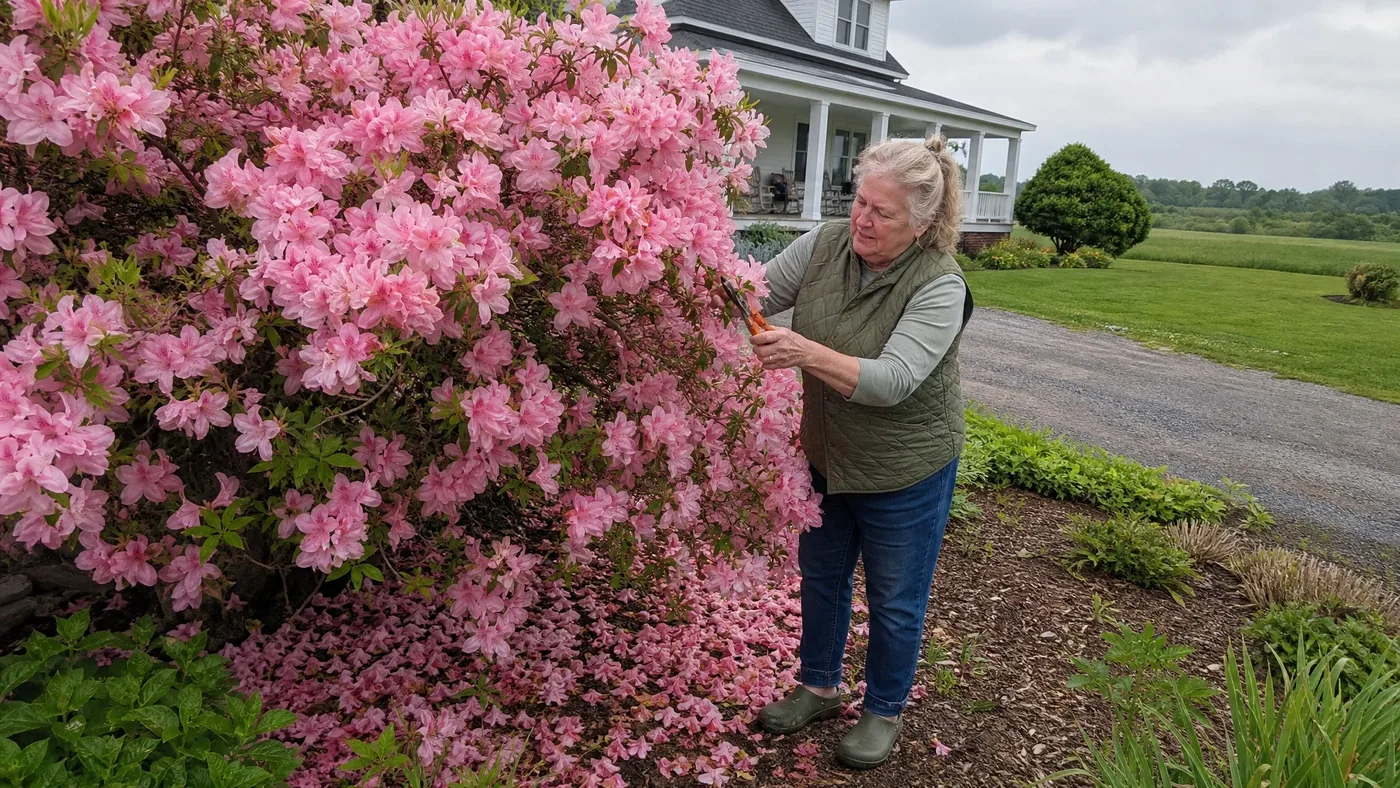
By the second week of bloom, the mulch beneath one old George L. Taber is blushing with fallen petals, soft orchid-pink and still fresh enough to look planted there on purpose. Overhead, a few clusters have started to brown, and the urge is almost physical: you want to walk the whole shrub and pick off every tired flower by hand.
Hold off, because that job has no end and the shrub does not need it. Done badly, post-bloom work can cost you next year's flowers, and done well it takes one light pass. This guide covers everything you need to know about spent blooms on this azalea, from whether picking is required and when next year's buds form to what to do about fallen petals and the routine for the weeks after bloom.
Do Spent George L. Taber Azalea Blooms Need Picking?
No, and we say that without hesitation. Deadheading means removing the spent flower clusters, and on a shrub with a few big blooms it is quick, tidy work. On a George L. Taber buried in flowers from top to bottom, it becomes a chore that never reaches the finish line.
The usual argument for deadheading is sound as far as it goes. It keeps a plant from putting energy into seed production and redirects that energy toward growth and next year's flower buds. Waiting still benefits the plant, with earlier removal simply conserving more energy.
That advice is written for azaleas and rhododendrons in general, and it assumes you can reach every flower. On a shrub that grows well past head height, we weigh a modest gain against a very large job, and the job loses.
What Doing Nothing Looks Like
If you leave the spent flowers alone, the petals drop, the browned remnants hang on for a while, and the glossy evergreen foliage slowly takes over the show. The shrub keeps its leaves through the year, so the plant never looks bare while the old flowers fade. For many of our customers, that quiet transition is perfectly acceptable.
One of the most common questions we get is whether browned flowers have to come off before any pruning. They do not, and the single light cut we describe below takes care of them. Our call is to skip blossom-by-blossom deadheading on mature plants.
How the George L. Taber Azalea Sets Next Year's Buds
Timing is what makes this topic matter. Azaleas set their flower buds for next year during the summer, which is why any pruning belongs in late spring or early summer, shortly after flowering. The petals falling now mark the end of one cycle, and the work for the next is about to begin.
The calendar shifts with climate. In Georgia, many azaleas begin to set flower buds in July, so pruning after early July may reduce next year's flower production. George L. Taber suits zones 8 through 10, and your cutoff depends on where in that range you garden, so ask your local extension service for yours.
What Is Safe to Disturb
Faded petals and the old flower stalks are finished, so removing them costs the plant nothing. The caution with deadheading is about the developing leaf buds at the base of each flower stalk, which you should never damage. That is why we never advise yanking or twisting clusters off.
If you do pick a few clusters on a low branch, snap or prune just below the flower head and stop there. Treat the base of the stalk as off limits, because that is where new growth is already getting started.
What to Leave Alone
The new shoots rising through summer carry the buds you will enjoy next spring. A heavy cut after buds start forming removes them, and you pay for it with a thin bloom. If a shrub flowers sparsely after a year of late cutting, our guide on why a George L. Taber isn't blooming or turns yellow walks through the other suspects.
So the decision is simple. Touch only what has finished flowering, and be done before buds begin forming where you live.
Counting Flowers on a Mature George L. Taber Azalea
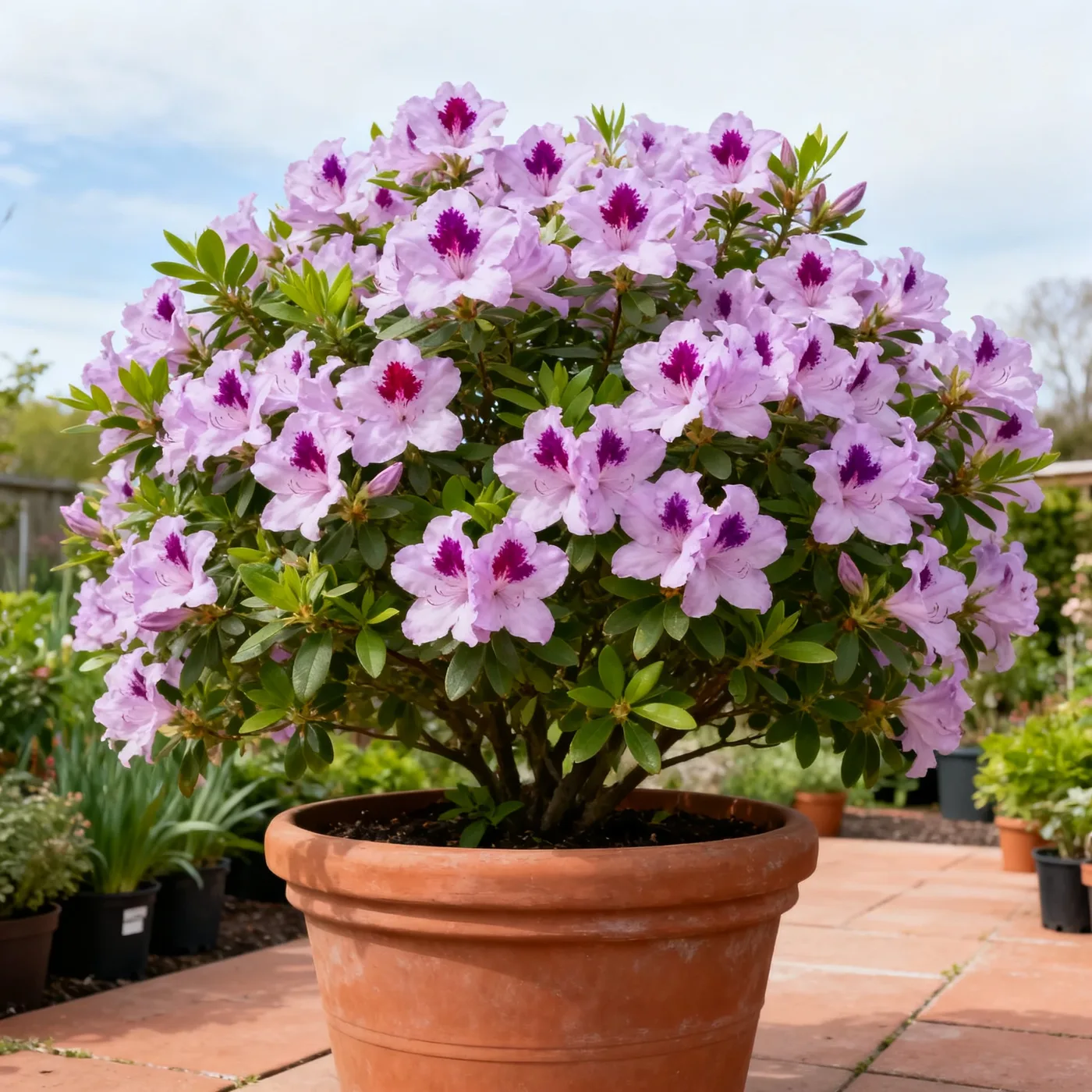
George L. Taber carries profuse, pink springtime blooms so plentiful and large that they completely hide the foliage. Anyone who has stood in front of an established plant in spring knows that is no exaggeration. You see flowers and almost no leaves, from the ground to the top.
Now add the scale. The cultivar reaches 10 to 12 feet tall and 8 to 10 feet wide, so the crown of an established shrub sits far above comfortable reach. The wider Southern indica group reaches 6 to 12 feet tall and 6 to 8 feet wide, which means George L. Taber sits at the large end of its group.
Large Flowers, Plenty of Them
Southern Indica hybrids carry larger flowers than Kurume hybrids, whose smaller blooms are just as plentiful. This azalea gives you both size and numbers, which is why the sheer count of flowers feels so different from a compact shrub with a handful of blooms. Every one of those flowers has a stalk, a base and leaf buds nearby that you would be working around.
Why Hand-Picking Fails in Practice
The flowers do not fade on one schedule, either. Some clusters brown while their neighbors are still fresh, so hand-picking means returning to the shrub again and again over the bloom window. If you plant in mass on 4 to 6 foot centers, you have a whole drift of shrubs to chase, and the ones in the middle are hard to reach at all.
Our decision is that hand-picking a mature George L. Taber is impractical, and we would not start. The one exception is a young plant you can reach around easily, where snapping off a few spent clusters gently is fine if you enjoy it.
Let the Petals Fall and Pick Your Moment
Once the show peaks, petals drop in soft, orchid-colored drifts across the mulch and around the trunk. We think the carpet looks lovely for a few days, and it asks nothing of you to protect the plant. Whether to tidy it at all comes down to two small questions.
Petals on the Mulch
Rake only where petals cause a problem, such as matting on a walkway or sticking to a patio. Elsewhere they can simply lie on the mulch, where they are out of the way and look good doing it. Pets are the other reason to rake. Azaleas are toxic to dogs, cats and horses, though the severity is low for the group, so we lean cautious and collect petals where animals can reach them.
Our guide to whether George L. Taber is toxic to pets and children covers the details. If you have a dog that investigates every corner of the yard, rake the bed clean rather than wait.
When Tidying Is Worth Doing
If you want the bed neat, do it once, soon after the flowers fade. Earlier removal conserves more energy, though waiting still benefits the plant. Our bloom time and flower color guide shows when a George L. Taber typically peaks, so you can count forward from the end of that window.
In our rows, the petals are down soon after the peak, and the shrubs look tidier than most customers expect. Our decision: enjoy the carpet for a few days, rake only where you must, and schedule one tidy-up for just after the last flowers go.
Skip the Fingertips and Reach for Shears
A light shearing handles every browned cluster at once. Southern Indica hybrids are very tolerant of pruning, which should be done after flowering, and that tolerance is what makes shears a safe choice on this shrub. The cut is quick because you are working at the outside of the canopy, where the flowers were.
How to Make the Pass
Hold the shears level and trim just beyond the faded flower ends, following the shrub's natural outline. Stay light, because this pass tidies and does not reshape. For structural cuts and renovation, our guide on how and when to prune a George L. Taber azalea covers the heavier work.
If that 10 to 12 foot reach is the real worry, remember that the shrub is a big one by nature. On the tallest plants, shear what you can reach comfortably from the ground and leave the top alone rather than balancing on a ladder.
When to Make It
Make the pass in late spring or early summer, shortly after the last flowers fade and before buds start forming in your area (early July in Georgia). Later is where the damage happens. This table compares the three approaches we get asked about on a mature shrub.
| Approach | Effort | Risk to next year's buds | Our verdict |
|---|---|---|---|
| Picking each cluster by hand | Very high | Low if gentle, but leaf buds at the stalk base can be damaged | Skip it |
| Doing nothing | None | None | Fine if you do not mind browned clusters |
| One light shearing after bloom | Low | Low if done before buds form | Our choice |
Our decision is the shears, once, right after bloom. If you cannot get to it before the buds form, skip it for the year rather than cut late.
Tidy Up After Your George L. Taber Azalea Season Ends
Here is the routine we suggest for the weeks after bloom, in the order we would do it. It is short on purpose, because the shrub does most of the work on its own.
- Wait until most flowers have faded and the petals have dropped, and enjoy the carpet for a few days.
- Rake petals off walkways and patios, and from any spot where pets or horses can reach them. Leave the rest on the mulch.
- Shear lightly just beyond the faded flower ends, following the shrub's natural shape, well before buds begin forming in your area.
- Step back and look. Skip any second cut, since extra trimming only risks the new shoots that carry next year's buds.
- Keep the root zone evenly moist through summer while the buds form, in the humus-rich, acidic, well-drained soil these azaleas want.
The last step matters more than it looks, because the summer after bloom is when the plant is building next year's show. Our guide on soil, pH and drainage covers what that looks like in practice, and watering matters just as much through those weeks.
If next spring's bloom comes in thin, check your cut dates first. Then check soil acidity, which this group prefers below pH 6.0, and how much sun the shrub gets. The group grows well in sun, so a thin bloom is more often a timing or soil problem than a light problem.
Enjoy the Petal Carpet, Then Take a Seat
George L. Taber does not need its spent blooms picked one by one. Its flower count and 10 to 12 foot size make that impractical, next year's buds form in summer, and one light shearing soon after bloom does everything useful.
So give yourself a few days of petal-strewn mulch to enjoy. Then make your single light cut and spend the hours you saved in a chair beside the shrub, watching the light move through the glossy evergreen leaves.
George L. Taber Azalea
Nursery-grown George L. Taber Azalea in sizes from 1 Gallon, shipped to your door.
From $29.99
Shop Now →Our George L. Taber azaleas root in moist, humus-rich beds that drain freely, and by spring they put on the heavy flush that blankets the mulch in petals. Every plant we ship is one we would put in our own ground, top quality and ready for a single light shearing after bloom. If you would like that kind of easy, generous shrub, see the plants we have ready.