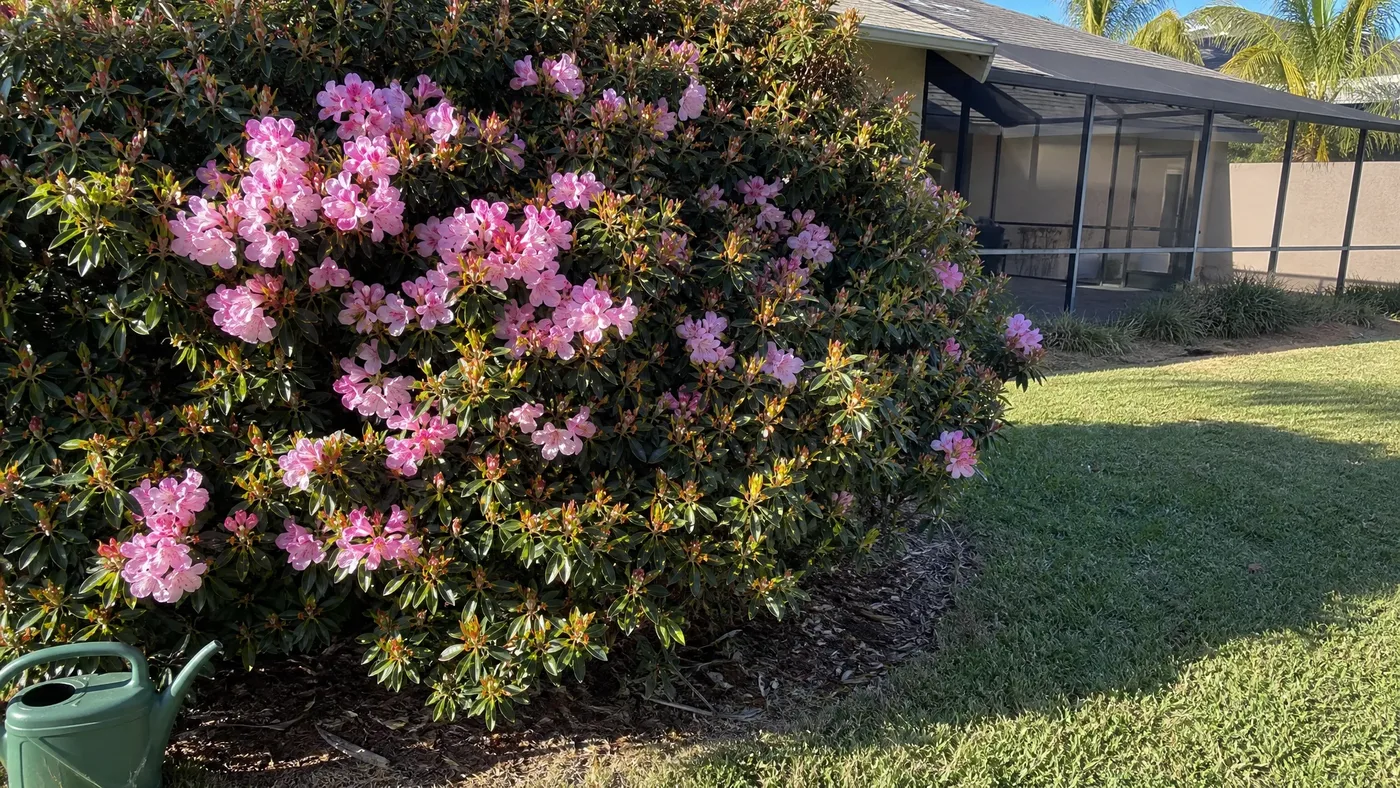
Why Are New George L. Taber Azalea Leaves Reddish in Spring?
A 30-foot hedge of 20 George L. Taber azaleas wakes up in the second week of April, and every shrub pushes coppery red tips within the same few days. The owner walks the row, counts the red tips, and wonders what went wrong. Nothing did.
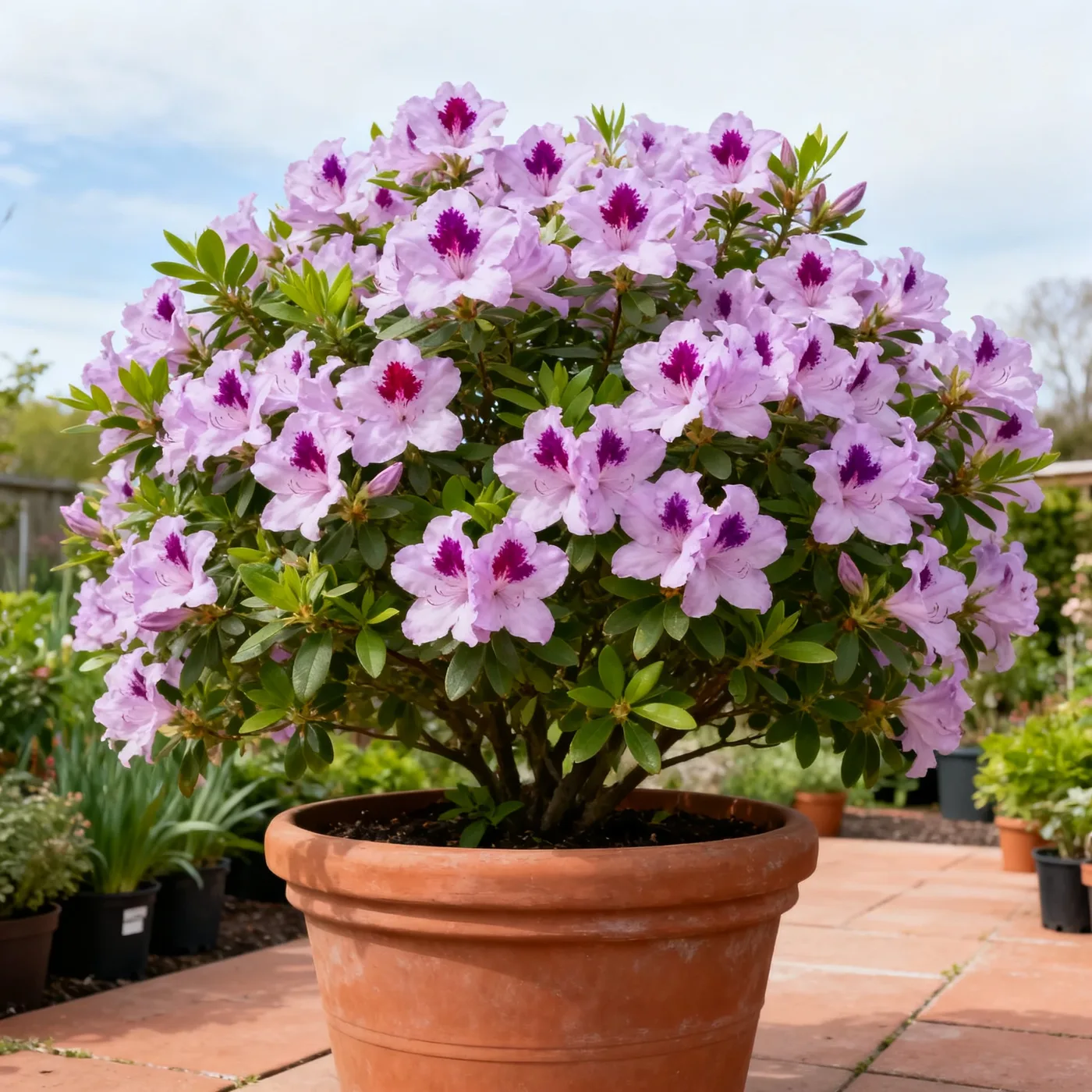
That red is the normal first color of new growth on this plant. It takes about 40 days to clear completely, and a hedge gives you enough plants to see the pattern. In this article, we'll go through the pigment behind the flush, a dated timeline with tip lengths, three checks for real trouble, and the log we'd keep to build your own baseline.
Twenty Shrubs and One Hedge in April
Take a hedge 30 feet long. Twenty young George L. Taber azaleas stand in it, 18 inches apart. On April 8 the owner finds red-bronze tips on all 20 plants. That is the case we follow for the rest of this guide, and the dates and measurements in it are a worked example, not a published trial. Your own days will shift with weather.
A word on that spacing. The usual guidance is 4 to 6 foot centers for mass plantings, because this cultivar reaches 10 to 12 feet tall and 8 to 10 feet wide. Eighteen inches works only as a dense starting hedge you plan to thin. If you are planting fresh, we would start at the wider spacing and skip the thinning.
Why use a whole hedge as the example? One red shrub can be an oddity. Twenty red shrubs in one week is a pattern, and a pattern is what separates a seasonal event from a problem. One of the most common questions we get each spring is whether red new growth means the plant is sick. Counting plants is the fastest way to answer it.
Why a George L. Taber Azalea Flushes Red First
Pick any red tip on the hedge and bend it gently toward the light. The young leaf is soft, small and copper-red, while the mature leaves behind it are dark green. The red is already in the new leaf. The green is still being built.
The chemistry is short. New leaves make reddish pigments called anthocyanins while their chlorophyll is still developing. As the leaf expands, chlorophyll takes over and the red fades behind it. No deficiency or disease is involved. It is a development stage, like a bud opening.
This cultivar is a large, spreading evergreen, so the old leaves stay on through the flush. That makes the red look louder than it does on a deciduous shrub. The pink spring blooms are so large and plentiful that they hide the foliage, so many owners first notice the red tips as the flowers finish.
Not the Same as Winter Purple
The red of spring growth belongs to new tissue. The purple cast on mature leaves in cold months is a different event on different leaves, and we cover it in our guide to winter purple leaves. If the red is on the tips only and the rest of the shrub is green, you are in the right guide.
Day Zero to Day Forty on the George L. Taber Azalea
Day zero in the hedge is April 8, the morning the bud scales loosen and the first red tip shows on any shrub. From there the owner measured the longest new shoot on three marker plants every seven days. The table shows what the log looked like.
| Day | Date | Longest tip | Color |
|---|---|---|---|
| 0 | April 8 | Bud swell | Red scales opening |
| 7 | April 15 | 0.5 inch | Deep bronze-red |
| 14 | April 22 | 1.5 inches | Red-bronze, leaves soft |
| 21 | April 29 | 3 inches | Copper turning green |
| 28 | May 6 | 4 inches | Mostly green, red edges |
| 40 | May 18 | Growth slowing | Fully green on all 20 |
Leaf Clock Versus Hedge Clock
Each leaf greens within about 2 to 3 weeks of opening. That is the leaf clock. The hedge clock is longer, because shoots do not all open on the same day. A shrub with a sunny south end flushes days before the shaded north end, and one shrub can carry shoots at three stages at once.
So when you see red on day 25, check whether it sits on the newest shoot or the oldest. Red on the newest shoot is on schedule. Red on a leaf that opened four weeks ago is not.
Three Checks That Rule Out Trouble
On April 20, day 12, the owner picks three shrubs, one at each end and one in the middle, and runs the same three checks on each. It takes about five minutes. Normal flush passes all three, and stress usually fails at least one.
- Firm leaf. A flush leaf is soft but flat, and it springs back when you press it. Curled, brittle or puckered leaves point to something else.
- Steady color. Flush red is even across the whole leaf and fades from the base outward. Look at the top surface for white specks and the underside for black or brown specks that feel gritty. Those mean lace bugs, not flush.
- Healthy stem. The stem under the red tip is green or pale tan, flexible, and free of dark sunken patches. Dieback behind the tip is not part of a normal flush.
The University of Arkansas extension says bronzing of azalea foliage is typically caused by lacebug feeding. That is why the specks check matters. Flush color is uniform and lace bug damage is stippled. If all three checks pass, leave the hedge alone, and our problems guide covers what to do when one fails.
When the Hedge Stays Red Past Week Eight
Suppose that on June 3, day 56, the owner finds 17 shrubs green and three at the east end still red. Eight weeks is well past the 40 days the hedge should need. Three plants out of 20 also tells you the cause is probably local, not seasonal. Look at what those three share.
Lace Bug Bronzing
Lace bugs begin attacking azaleas in May, right after the flush, so a late red look in June is often feeding damage. Check for specks on top and gritty dark spots underneath. Sunny, dry spots such as an east end against a wall suffer first.
Soil pH Above 6.0
Southern indica hybrids want acid soil, below pH 6.0, with humus-rich, moist soil and good drainage. Foliage in high-pH soil turns dull, mottled or yellow instead of clean green. A soil test settles it, and our soil guide covers the correction.
Wet Roots or Feeding Mistakes
Root rot is on the list of diseases for this group, and a stalled, off-color shrub in a low spot is a classic sign. A second cause is feeding at the wrong time. Fertilize as soon after bloom as possible, as the extension says, so you are not feeding the reddish flush itself. See what and when to feed.
Tracking the Hedge Across One George L. Taber Azalea Season
In our rows, we mark the same few plants every year and measure them the same way. The owner of the hedge did that with plants 1, 10 and 20, spaced across the 30 feet. A baseline only works if you measure the same plants on the same day of the week.
Each entry in the log holds five things:
- The date and the day count from the first red tip.
- The longest new shoot on each marker plant, in inches, measured from the base of the new growth.
- A color note in plain words, such as deep red, copper, green with red edge.
- How many of the 20 shrubs still show any red.
- Any specks, curling or dieback, even if you are unsure it matters.
The log runs weekly through May, then monthly. In May it adds a lace bug check, since that is when they start. By autumn it also shows what is not flush: the extension warns against encouraging new growth late in fall and early winter, so red at that season is a different story. Shed leaves are covered in our fall leaf drop guide.
If you are starting with shrubs from us, the first spring in your yard is the best time to begin.
What the Numbers Say About George L. Taber Azalea Flush
Total the hedge's season and a clear picture emerges. Every plant reddened in the same week, tips reached about 4 inches by day 28, and no plant was still red at day 40. The table sets those counts against the rule we would use.
| Measure | Hedge result |
|---|---|
| First red tip | April 8 (day 0) |
| Shrubs showing red in the first week | 20 of 20 |
| Longest tip at day 28 | 4 inches |
| Shrubs fully green at day 40 | 20 of 20 (May 18) |
| Shrubs still red at day 56 | 0 of 20 |
A normal flush is synchronized, since the plants start within about a week of each other. It is even in color. It clears from each leaf in 2 to 3 weeks and from the whole shrub in around six. Anything red after eight weeks goes back to the three checks.
One practical rule follows. Do not shear the red tips in April, because pruning is best done after flowering, as our pruning guide explains. You would cut off the year's growth for nothing.
A Fully Green George L. Taber Azalea Hedge by May 18
The hedge ended its season with a tally of 20 of 20 plants fully green by May 18, day 40. Red tips in April were the plant working normally, and the three checks of a firm leaf, steady color and a healthy stem would have caught anything else. Red that lasts past week eight is the signal to look for lace bugs, high pH or wet roots.
Next April, write down the date of your own first red tip, then measure one shoot a week. After one season you will know your plants' normal and can spot a change quickly.
George L. Taber Azalea
Nursery-grown George L. Taber Azalea in sizes from 1 Gallon, shipped to your door.
From $29.99
Shop Now →Each George L. Taber we raise starts in acidic, humus-rich ground that drains freely, which is why we have seen this red spring flush fade to green so many times. Our small business is made up of growers, and we raise every top-quality shrub we sell. To follow your own plant's color from first red tip to full green, begin with one from our shop.