Why Do George L. Taber Azalea Leaves Turn Purple in Winter?
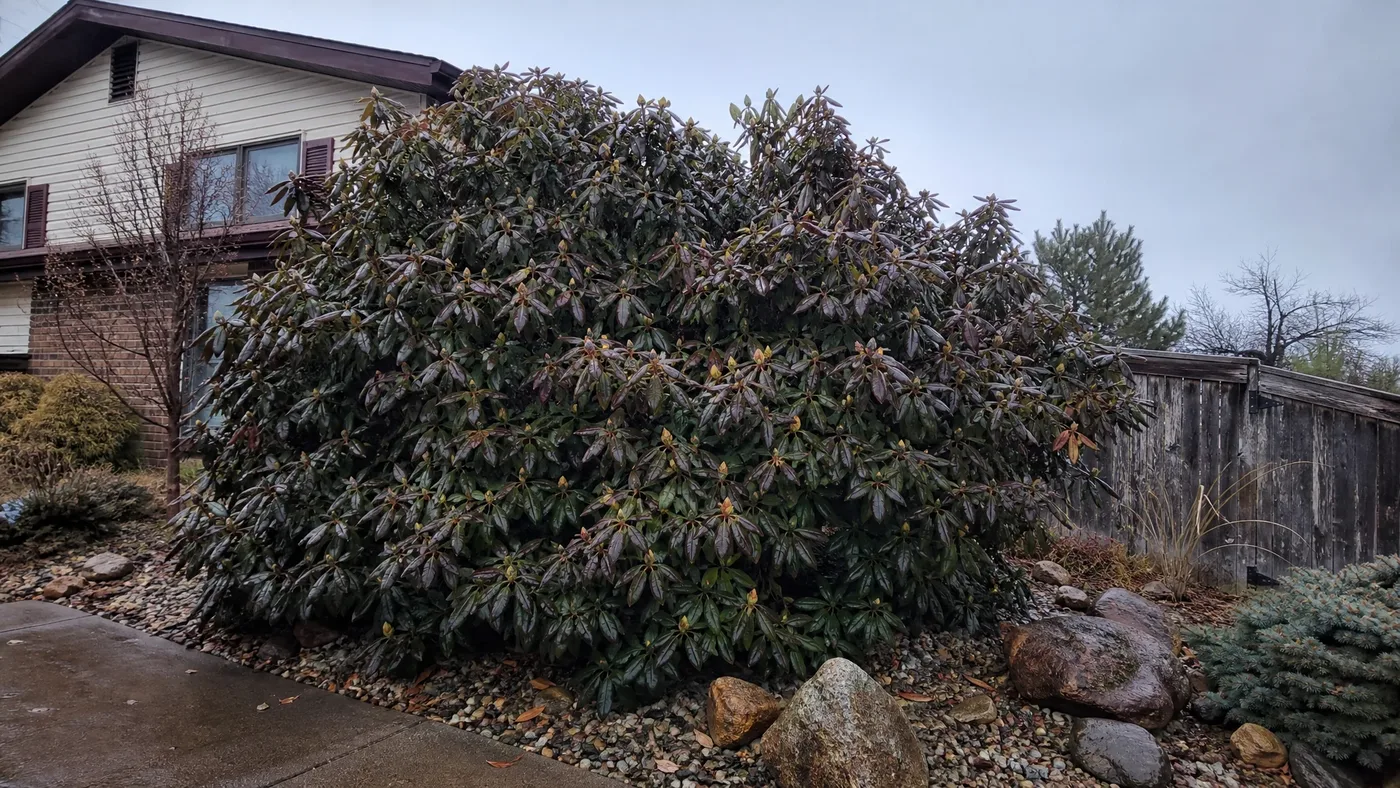
You walk out to the mailbox in December and the George L. Taber azalea by the walk has gone the color of red wine. You expected an evergreen to stay green all winter, and instead the whole shrub looks bruised. Most owners assume frost has killed it. In nearly every case we hear about, the plant is doing exactly what it does when nights turn cold.
Whether that is cause for alarm depends on a few things you can check in a minute. Below, you'll find out all about winter leaf color on George L. Taber, including the pigment behind the purple, how sun and wind change the pattern, simple tests for real damage, the yellowing look-alike, dieback after hard freezes, and how the plant greens up again in spring.
Purple Cast on a George L. Taber Azalea
The most common sighting is an even purple or burgundy flush across the whole leaf, starting as nights turn cold and deepening through winter. George L. Taber is an evergreen, so unlike a deciduous azalea it keeps every broad leaf on the branch all winter. That is why the color is so easy to see. A deciduous azalea would simply drop its leaves and show you nothing.
The color comes from anthocyanins, the same reddish-purple pigments that turn maple leaves red in fall. In cold weather the leaf keeps making sugars in daylight but cannot use them as quickly, and it builds these pigments in its cells. It works something like a sunscreen the plant makes for itself while growth is shut down. Nothing is rotting or starving. The green chlorophyll is still in the leaf and is only being masked.
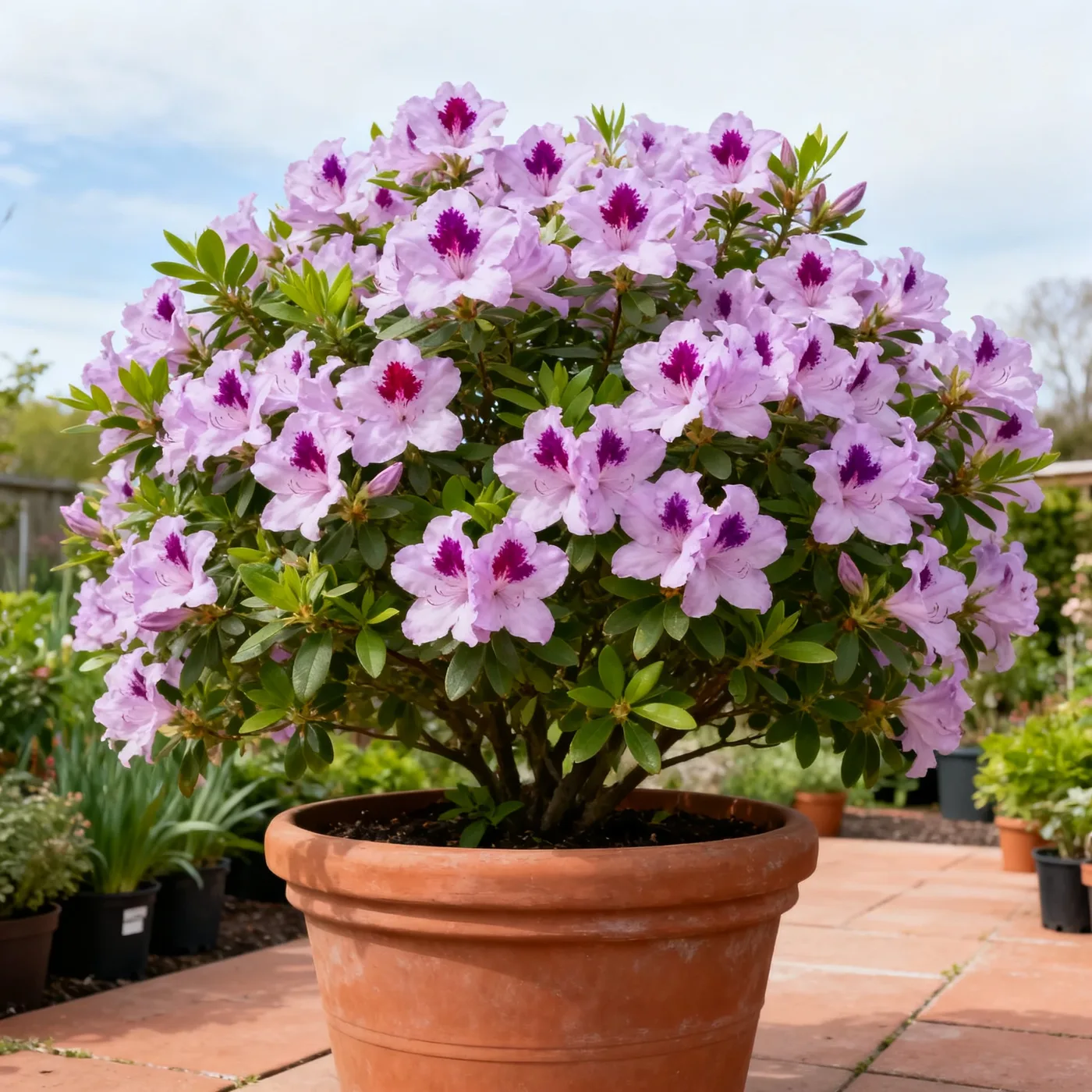
Winter is also the one season when you really look at the leaves. In spring the pink flowers are so plentiful and large that they completely hide the foliage. This cultivar is hardy in zones 8 through 10, so a run of cold nights is part of its normal winter across much of that range.
A purple cast is a normal reading when three things are true: the color is even, the leaves are firm, and the plant has held its leaves. If you garden near the cold edge of what this cultivar tolerates, our hardiness zones guide explains how far to trust that rating.
Bronze or Maroon Leaves Only on Exposed Sides
Color that is not even tells you more than color that is. Because the pigment responds to light and cold together, where it shows maps closely to how the plant is exposed, and the pattern usually points straight to the cause. Walk around the shrub and look at it from every side before you decide anything. The if-then calls below cover the three patterns we see most.
The Sun-Facing Side
If the south or west side is bronze or maroon while the inside and shaded side are still green, you are looking at light. The pigment builds fastest where cold meets bright winter sun. Do not move or shade the shrub for this. The southern Indica hybrids grow well in sun, and the tint fades on its own. Start worrying only if those same leaves also dry out at the edges.
Older Leaves Versus New Growth
If the older leaves toward the center of a branch are the deepest color while the tip growth stays greener, that is routine. Older leaves have been through more cold and more light, and they tend to be the ones the plant sheds as new growth pushes. If instead the newest growth is turning dark, limp or brown at the edges, treat it as cold injury and go straight to the tests in the next section.
Wind and Open Sites
A plant out in an open bed often colors more on its windward side. If that side is bronze but the leaves are also dull, curled and crisp at the edges, wind is drying them as well as cold coloring them. The fix is a windbreak and moist, not soggy, soil before the ground freezes. Color alone on a sheltered plant needs no fix at all.
Is the Purple Spreading Into Dead Tissue?
Color alone never tells you a leaf is dead, so use your hands. Purple tissue that is still alive is firm and flat, and it flexes without cracking. Dead or dying tissue changes texture before it changes color: leaves turn papery and curl, or they go soft and wet. Deepening purple is a different problem from tissue turning brown, and the browning is what you are watching for.
One of the most common questions we get is whether a shrub is dead, and the scratch test answers it faster than we can on the phone. Scrape a small patch of bark off a twig with a fingernail. Bright green underneath means live wood. Brown, dry or gray means that twig is gone. Test several twigs on different sides, because damage is often patchy.
This table puts the checks side by side so you can match what you find.
| Check | Harmless winter tint | Real damage |
|---|---|---|
| Leaf feel | Firm and flat, flexes without cracking | Papery and curling, or soft and wet |
| Twig scratch | Green under the bark | Brown, dry or dark under the bark |
| Leaf margins | Same color right to the edge | Brown margins or blackened tips |
| Change over time | Steady, then fades in spring | Brown area grows after each cold spell |
| Stem base | Firm bark at the soil line | Soft, mushy or sunken bark |
If everything lands in the middle column, leave the plant alone. If two or more land on the right, read the dieback section below. A mushy stem base points away from cold and toward a wet-soil problem, which the next section covers.
Yellow Leaves on George L. Taber Azalea Plants
True yellowing is a different picture. The leaf loses green and turns pale yellow or mottled, often with the veins staying green, and there is no purple in it at all. Cold tint darkens a leaf, while chlorosis bleaches it. If you see yellow where you expected burgundy, stop thinking about weather and start thinking about the soil.
The southern Indica hybrids need humus-rich, moist soil with good drainage, and the group needs acid soil below pH 6.0. When pH climbs, often from lime leaching out of concrete edging or from alkaline water, the roots cannot take up iron even though it is in the ground, and the leaves go pale.
Drainage produces the same look from the other direction. Waterlogged roots cannot work, so leaves yellow while the soil seems fine. Crown rot and root rot are also among the group's diseases, and a bed that stays soggy through winter invites both. Here is the order we use when someone describes yellow leaves:
- Push a finger into the soil at the edge of the root zone. If it is soggy days after rain, fix drainage first.
- Look for lime sources nearby, such as concrete edging, a gravel path or a limed lawn that drains toward the bed.
- Run a soil test through your local extension service and read the pH.
- Feed only after pH and drainage are sorted out, never before.
Our guide on why a George L. Taber azalea stops blooming or turns yellow covers chlorosis treatment in full, and the soil and drainage guide covers the fixes, so we will not repeat them here.
When a George L. Taber Azalea Shows Dieback
Dieback is real damage, and after a hard freeze it tends to appear in a predictable order. Branch tips and leaf edges brown first. Bark may then split lengthwise on a stem, and finally whole branches fail to leaf out in spring. Purple leaves can be present throughout, which is why people confuse the two. The difference is that dieback tissue goes brown and dry and stays that way.
Browning Tips and Split Bark
Brown tips on a few shoots are mostly cosmetic, and the shrub grows past them. Split bark is more serious because cracked wood dries out and lets in disease. We do not seal or wrap the wound. Keep the base mulched and evenly moist, and watch whether the branch above the split pushes new leaves. Our winter care guide covers frost crack and how to prevent it.
Wait Before You Cut
Our advice is to wait. Freeze-damaged wood often looks worse in January than it turns out to be, and you cannot judge a branch until the plant has had the chance to push new growth. The group is very tolerant of pruning, done soon after flowering, so you lose nothing by waiting. Here is how we sort it out:
- Leave browned tips alone until the plant has flowered and leafed out, then trim them with your normal post-bloom pruning.
- If a branch scratches brown, tie a bit of tape on it and check again at bloom time before you cut.
- Cut a dead branch back to the point where the twig scratches green, or to the junction with a live branch.
- Avoid winter cutting, which removes the flower buds the plant has already set for spring.
Bag the trimmings instead of leaving them where pets or livestock roam, since azalea is toxic to dogs, cats and horses. This is a big shrub, 10 to 12 feet tall and 8 to 10 feet wide, so losing one branch rarely changes its shape for long. Our pruning guide shows where to make the cuts.
Does a George L. Taber Azalea Green Up Again?
Yes, as long as the tissue is alive. As days lengthen and the weather settles, the leaf starts using its sugars again, the pigment fades, and the green chlorophyll underneath shows through. The change is gradual and even, starting on the leaves that get the most warmth. Expect it to finish around the time the flower buds open, and before the blooms hide the foliage anyway.
What Normal Recovery Looks Like
Normal recovery looks like a slow fade from burgundy to bronze to green on the same leaves, with buds swelling and new leaves unfurling at the branch tips. Some older leaves may yellow and drop as new growth pushes out, which is ordinary turnover and not a warning. In our rows, deep winter color on a shrub with plump buds is something we like to see, not something we worry about.
Signs the Plant Is Not Recovering
Be suspicious if leaves stay purple and also dry out, or if whole sections drop their leaves at once. Other bad signs are no new growth by the time neighboring azaleas have leafed out, twigs that still scratch brown, and bark that stays soft at the base. Those point to freeze damage or root trouble. Recheck drainage and pH as described above, and cut only back to live wood once you can see where it begins.
What Winter Color Says About George L. Taber Azalea
Read the color together with the leaf and the twig. Even purple, bronze or maroon on firm leaves is the cold response of an evergreen, and it follows sun and wind exposure. Yellow with no purple is a soil question about pH and drainage. Brown, dry or mushy tissue is damage, and it waits for spring before any pruning.
The rule we give customers for the next cold snap is simple: if the leaves are firm and the twigs scratch green, leave the plant alone and wait for spring.
George L. Taber Azalea
Nursery-grown George L. Taber Azalea in sizes from 1 Gallon, shipped to your door.
From $29.99
Shop Now →As growers with our own farms, we raise George L. Taber azaleas in acidic, humus-rich beds that drain freely, so a healthy winter tint is a sight we know well. Before a plant leaves us, we scratch-test its twigs and read its leaves for anything beyond cold color, and we only ship top-quality shrubs we would plant ourselves. You can see the plants we have ready in our shop.